
How Developers Sell Units Before Construction | Sayt
Real Estate Marketing, Pre-Sales Strategy
How Developers Sell Units Before Breaking Ground: A Pre-Sales Marketing Guide
Pre-sales can make or break a development. With the right system, you can secure funding, manage timelines with confidence, and sell a significant portion of your inventory long before the first crane arrives on site. This guide walks through a modern, structured approach to off-plan marketing, and how Sayt Digital helps developers put the entire system in place.
Why Early Marketing Matters Long Before Groundbreaking
Many projects wait too long to start marketing, only launching campaigns when permits are approved or construction is visible. By then, you have already lost valuable time. Early marketing, starting 12 to 24 months before groundbreaking, allows you to:
Build a qualified interest list and understand demand before finalizing layouts and pricing.
Demonstrate traction to lenders and investors, improving access to project funding.
Smooth out your sales curve, instead of relying on a last-minute push after completion.
In today’s environment, pre-sales are essential for project funding and timeline management. Lenders want to see real commitments, not just pro formas. A strong pre-sales pipeline gives you leverage and predictability.
The Phases of a High-Performance Pre-Sales System
Successful off-plan sales rarely come from a single campaign. They come from a structured system that moves buyers from curiosity to commitment across five phases:
Interest list building, 12 to 24 months out
Making the unbuilt project feel real
Targeted campaigns to a high-converting microsite
VIP reservation events
Nurturing buyers through construction to handover
Each phase is broken down in detail below.
The Unique Challenges of Off-Plan Sales
Selling units that do not yet exist is fundamentally different from selling completed inventory. Buyers must commit based on trust, vision, and information. Common challenges include:
Overcoming uncertainty about finishes, views, and final quality.
Explaining complex pricing, payment schedules, and construction timelines.
Managing expectations when approvals or construction stages shift.
Without a clear system, these issues create friction and slow down commitments. With the right tools and messaging, they become manageable, and even reassuring, touchpoints in your buyer journey.
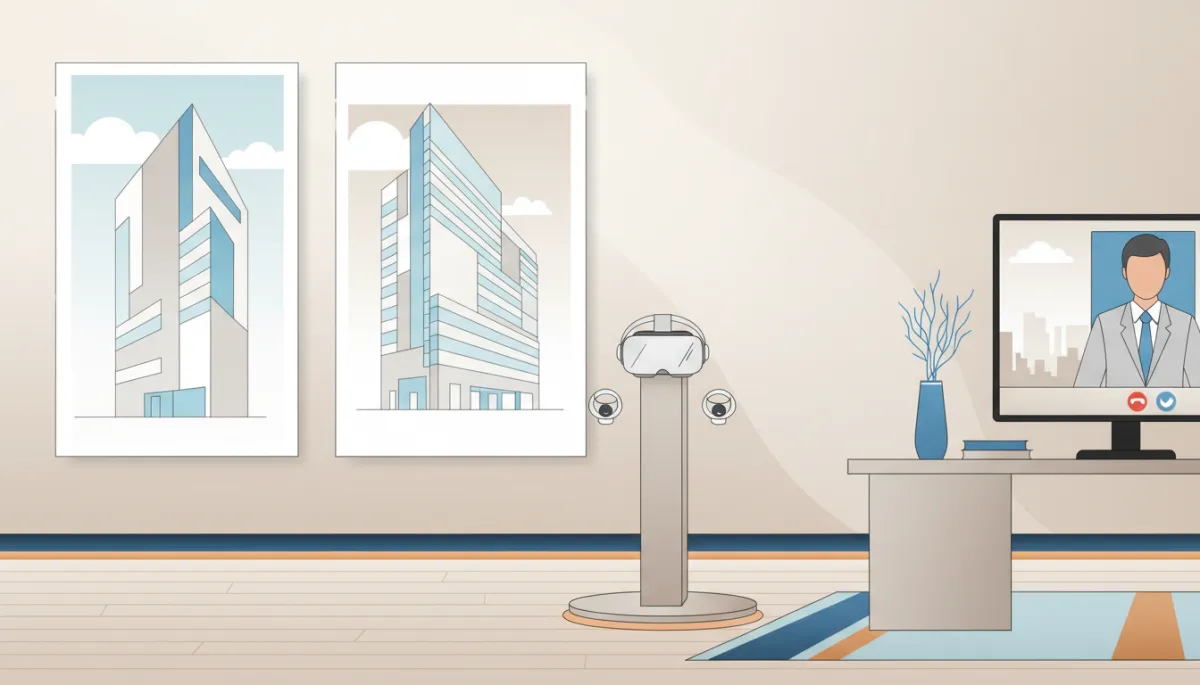
Renderings, virtual tours, and remote calls help buyers commit to homes they cannot yet visit.
Building an Interest List 12–24 Months Before Launch
The most successful launches are rarely a surprise. They are the result of a long runway where developers steadily build an interest list 12 to 24 months out. Instead of waiting for a finished product, you:
Capture email addresses and phone numbers from early enquiries, local events, and digital campaigns.
Segment prospects by budget, unit preference, and geography for future targeting.
Test messaging and pricing assumptions before you lock in your offering.
By the time you officially launch, you are not starting from zero, you are activating a warm, educated audience that has been waiting for your email.
Making the Unbuilt Project Feel Real: Renderings and Virtual Showrooms
To bridge the gap between blueprint and reality, you must help buyers see themselves living or investing in the space. High-quality architectural renderings, interactive floor plans, and virtual showrooms are essential. They allow prospects to:
Explore different unit types, views, and finish packages from any device.
Understand scale, light, and flow in a way static brochures cannot deliver.
Share the experience with partners, family members, or advisors who influence the decision.
When executed well, these tools replace uncertainty with excitement, and move buyers closer to reserving a unit they have only seen on screen.
Targeted Campaigns to a High-Converting Microsite
Rather than sending traffic to a general corporate website, leading developers build a dedicated microsite for each major project. Targeted campaigns, including search, social, display, and email, drive prospects to this focused environment where every element is designed to convert:
Clear value proposition and location story, supported by visuals and data.
Simple forms for registering interest, booking a call, or reserving a unit.
Integrated analytics so you can see which campaigns and audiences are producing real leads.
VIP Reservation Events: Turning Interest into Commitments
Once your list is warm and informed, it is time to reward them. VIP reservation events, whether in-person, virtual, or hybrid, create a sense of urgency and exclusivity. You can:
Offer first access to the best units and launch pricing for early buyers.
Present payment schedules, incentives, and reservation processes clearly, with a team on hand to answer questions in real time.
Secure reservations and deposits that directly support your funding and construction schedule.
Structured Remote Follow-Up for International Buyers
For many projects, international buyers and out-of-town investors are a critical audience. They cannot always visit your showroom, but they still expect a premium experience. Structured remote follow-up ensures they receive it. This includes:
Scheduled video consultations with screen-shared plans, renderings, and financial projections.
Automated yet personalized email sequences that address common questions and next steps in their language and time zone.
Secure digital document signing and payment workflows that reduce friction and delays.
This level of structure builds confidence, shortens decision cycles, and opens your project to buyers who may never set foot in the city until completion.
Nurturing Buyers Through Construction to Handover
The relationship does not end when the reservation form is signed. Nurturing buyers through construction is essential for reducing cancellations, encouraging referrals, and protecting your brand. A well-designed nurture program might include:
Regular construction updates with photos, milestones, and clear explanations of what is happening on site.
Timely reminders about payment stages, selection deadlines, and documentation requirements.
Opportunities to upgrade finishes or purchase additional units as the project progresses.
When buyers feel informed and cared for, they are far more likely to stay the course, and to tell others about the experience.
How Sayt Digital Delivers Full-System Pre-Sales Implementation
Coordinating all of these moving parts, including interest list building, virtual assets, microsites, campaigns, events, and remote follow-up, can overwhelm internal teams. That is where Sayt Digital comes in.
Sayt Digital partners with developers to design and implement a complete pre-sales system, tailored to each project and market. Their team supports:
Strategy and planning for early marketing and funding alignment.
Coordination of renderings, virtual showrooms, and conversion-focused microsites that reflect your brand and vision.
Campaign management, CRM setup, and structured remote follow-up workflows, so your sales team can focus on high-value conversations.
With Sayt Digital handling the architecture and execution of your pre-sales system, you gain a predictable engine for selling units before breaking ground, supporting both your financing requirements and your delivery timelines.
Bringing It All Together
Off-plan sales are no longer a gamble reserved for only the hottest markets. With disciplined early marketing, a phased pre-sales system, and structured support for both local and international buyers, developers can reliably sell units well before construction starts. The result is stronger funding positions, clearer timelines, and more resilient projects.
When you are ready to turn your next development into a fully sold story before the first shovel hits the ground, a partner like Sayt Digital can help you put every piece of the system in place, and keep it working from first enquiry to final handover.
Frequently Asked Questions About Pre-Sales and Sayt Digital
How early should we start pre-sales marketing for a new development?
For most projects, you should begin structured pre-sales marketing 12 to 24 months before groundbreaking. That window gives you time to build an interest list, refine your positioning, and demonstrate traction to lenders long before you open a sales gallery or start construction.
What kind of projects benefit most from a full pre-sales system?
Any development where funding, absorption, or phasing depends on early commitments will benefit. That includes multi-family, mixed-use, resort, and master-planned communities, especially when you are targeting a mix of local and international buyers or launching in a competitive market.
Do we need a sales gallery, or can we sell entirely off-plan and online?
A physical sales gallery is helpful but not mandatory. With the right mix of renderings, virtual tours, and structured remote consultations, many developers now secure reservations and deposits from buyers who never visit in person. Sayt Digital designs systems that work both with and without a showroom.
How does Sayt Digital work with our in-house sales and marketing teams?
Sayt Digital typically acts as a specialized extension of your team. Your internal group keeps control of brand and commercial decisions, while Sayt Digital handles system design, microsite and asset creation, campaign execution, CRM setup, and follow-up workflows. Your salespeople spend more time on qualified conversations, and less time chasing cold leads.
What results can we realistically expect from a well-executed pre-sales system?
While every market is different, a disciplined system often leads to meaningful pre-sales before construction, smoother absorption during the build, and fewer surprises at handover. Developers typically see clearer funding conversations, more predictable cash flow, and a stronger reputation with both buyers and financial partners.
How do we know if our current marketing is ready for off-plan pre-sales?
If you do not yet have a project-specific microsite, structured interest list, and defined follow-up workflows, you are likely leaving pre-sales on the table. Sayt Digital can review your current approach, identify gaps, and recommend a practical roadmap to bring your next development in line with modern pre-sales best practices.