
Real Estate SEO in Plain English: What Works in 2026
Real Estate, SEO, 2026
Real Estate SEO in Plain English: What Actually Moves the Needle in 2026
Real estate SEO is not one thing. It is three kinds of work operating together: a technical foundation that lets search engines read and trust your site, content that answers the questions buyers actually search, and authority signals that prove your business is credible. It is not fast. The early months are mostly foundation with little visible movement, meaningful traffic growth typically takes several months to appear, and the payoff compounds over years. Anyone promising first-page rankings in weeks is not being straight with you. What follows is what the work involves and how long it takes.
Why Real Estate SEO Is Harder Than Normal Local SEO
A restaurant doing SEO competes with other restaurants in town. A real estate business competes with some of the largest websites on the internet.
Search anything generic, like "apartments for sale" plus a major city, and the first page belongs to the portals: Zillow, Realtor.ca, and their regional equivalents in every market. These sites have millions of pages, enormous authority, and teams dedicated to keeping that position. Competing with them head-on for generic terms is not a strategy. It is a donation.
The way in is different: long-tail and local-specific terms the portals cover thinly or generically. "New developments in [specific district]," "off-plan payment plans in [city]," "buying property in [city] from abroad." Lower volume per term, far higher intent, and winnable, because a portal's auto-generated area page cannot match a genuinely knowledgeable local answer.
The second difference is the buying cycle. Someone searching for a restaurant eats tonight. Someone researching a property purchase may search for a year before contacting anyone. Real estate SEO is therefore not about catching a transaction. It is about being the source a buyer keeps returning to across a long consideration cycle, so that when they finally reach out, it is to you. That changes what you publish and how you measure it.
The Three Pillars
1. Technical Foundation
This is the invisible layer: site speed, mobile experience, clean indexing so every page that matters gets crawled, and schema markup that tells machines who the business is and what each page contains.
Visitors never see this work, which is why it is chronically neglected. But it is the multiplier on everything else. A brilliant article on a slow, badly indexed site is a brilliant article search engines will not rank. On most real estate sites we audit, the technical layer is where the first months of work go, because content published onto a broken foundation is wasted.
The good news: technical work is largely finite. Done properly once, it needs maintenance, not reinvention.
2. Content
Content is what actually earns organic traffic, and the standard is simple: pages and posts that answer real questions real buyers and sellers type into a search box, built around actual search demand rather than what the business feels like saying about itself.
That means area guides with genuine local knowledge, honest explainers on payment plans and buying processes, project pages that answer practical questions, and posts targeting what your buyers specifically ask, including buyers researching from abroad. One question per page, answered directly, by someone who clearly knows the market.
What it does not mean is generic filler. "Top 10 tips for home buyers" written for no particular market helps no one and ranks for nothing. Ten thin posts lose to three genuinely useful ones every time. Content is the pillar that never finishes: consistent publishing separates sites that grow from sites that plateau.
3. Authority
Search engines rank sites they trust, and trust is earned through signals from the rest of the web: backlinks from relevant sites, listings in legitimate directories, and local citations.
For real estate, realistic sources are industry directories, business associations, press mentions, partner sites, and local publications referencing something worth referencing. This is slow, accumulative work. No shortcut here survives contact with reality: bought link schemes turn a slow strategy into a penalized one.
Consistency matters too: the same name, description, and details across your site, Google profile, directories, and socials reinforce that yours is a real business worth ranking and, increasingly, worth citing in AI answers.
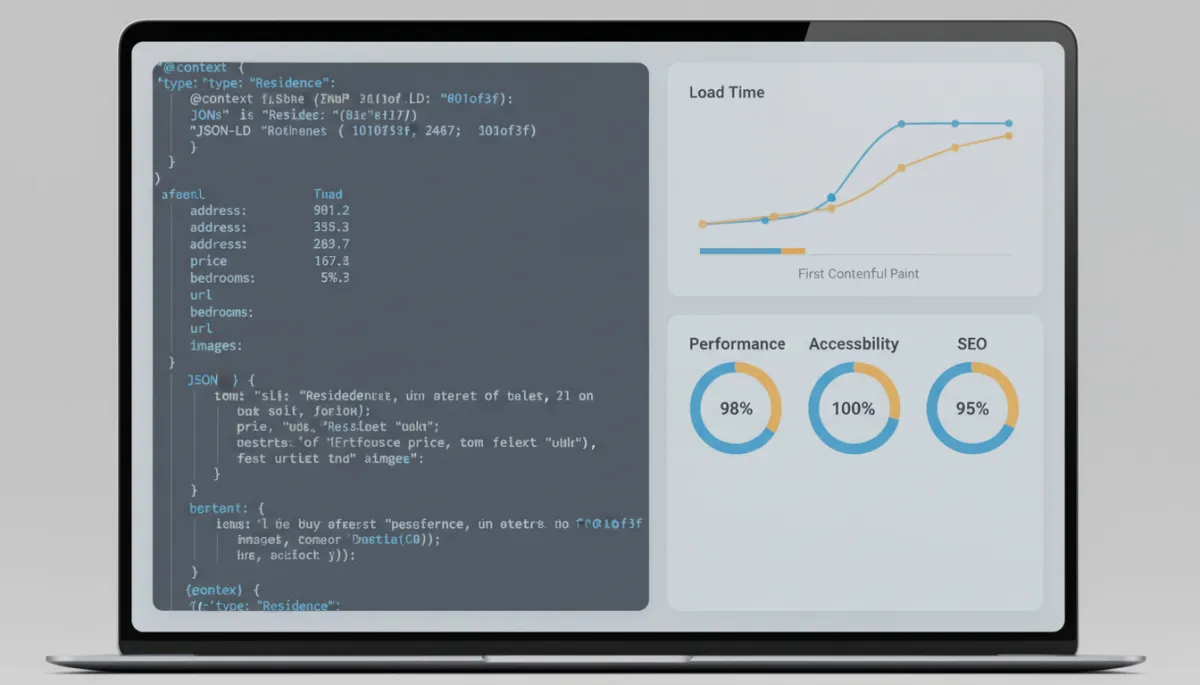
Clean technical foundations quietly boost every high-intent page you publish.
The Honest Timeline
The pacing to expect, in phases rather than false precision.
The first phase, roughly the opening few months, is foundation: technical fixes, site structure, schema, analytics, and the research that decides what content to build. Visible results are minimal, and that is normal. Judge it by work completed, not traffic.
The middle phase is when content publishing hits a rhythm and early pages begin to index and rank for long-tail terms, with traffic moving on the least competitive terms first. This typically lands in the several-months range and arrives gradually rather than as an event.
The compounding phase is where SEO justifies itself. Pages published a year ago still produce. New content ranks faster because the site has earned trust. Rankings hold with maintenance rather than constant push. This is the asset stage, measured in years, and the reason SEO is worth the slow start: unlike paid traffic, it does not stop when spending stops.
If a project cannot tolerate that pacing, paid media is the right tool for the immediate gap, with SEO building underneath it. The mistake is expecting one to behave like the other.
How to Spot Wasted Spend and Scams
The gap between real SEO and sold SEO is wide, and the warning signs are consistent.
Guaranteed rankings are the loudest one. Nobody controls Google, so nobody can guarantee position one, and firms that promise it either know they are lying or plan to rank you for terms nobody searches.
Vague reports are the second. If the monthly report is impressions, "optimizations made," and rankings for keywords you never agreed mattered, you are buying activity, not outcomes. A real report shows organic traffic, the queries and pages producing it, and the leads it generated.
Unexplainable work is the third. Ask any SEO provider what they did last month and why. A legitimate one answers in plain language: fixed these issues, published these pages, earned these mentions. If the answer is proprietary mystique, it is covering for something.
How Sayt Digital Runs SEO for Real Estate Clients
We run all three pillars as one system for developers and brokers, because separately they underdeliver: technical work first so nothing is built on sand, then a content engine targeting the questions your buyers search, including international and long-tail demand the portals ignore, with authority and entity consistency built alongside. Reporting is in the terms this article uses: traffic, queries, and qualified leads, never activity for its own sake.
We will also say plainly what most proposals will not: if you need buyers this quarter, SEO alone is the wrong plan, and we will tell you so. To see what your site needs and what a realistic timeline looks like for your market, book a consultation with Sayt Digital and we will walk through it honestly.
Frequently Asked Questions
How long until I see results from real estate SEO?
Expect foundational work with little visible movement first, early traffic gains on long-tail terms after that, and compounding growth on a timescale of months to a year and beyond. Real estate SEO is an asset that builds, not a switch that flips. Any promise of first-page rankings in weeks is a warning sign, not an offer.
Can I compete with Zillow and Realtor.ca?
Not for generic terms, and you do not need to. Portals win "apartments for sale [city]" but cover specific local and long-tail questions thinly. A developer or brokerage with genuinely knowledgeable area guides, project detail, and answers for niche buyer questions can outrank them where intent is highest and win the searches that actually produce clients.
Do I need a blog?
You need answer-driven content, and a blog is the standard container for it. What matters is that each post targets a real question with real search demand and answers it well. A modest number of genuinely useful, regularly maintained posts beats a large archive of filler.
Is SEO worth it if I already run paid ads?
Yes, because they solve different problems. Paid ads produce leads now and stop the moment spend stops, while SEO builds slowly and keeps producing without per-click cost once established. Mature real estate businesses run both: ads for immediate pipeline, SEO to reduce dependence on rented traffic.
What does real estate SEO cost?
It varies with market competitiveness and how much of the three pillars you already have, so credible providers scope after an audit rather than quoting blind. The more useful question is what a qualified organic lead is worth to you over years, because that is what the investment compounds into. Be wary of pricing that sounds too cheap to include real content production, because it usually is.